

Kathmandu Valley
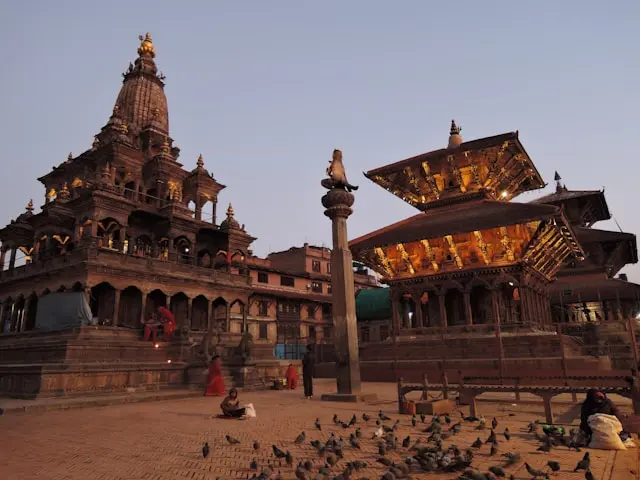
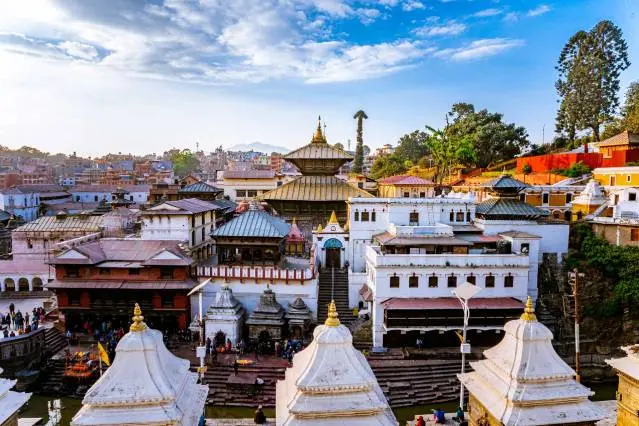
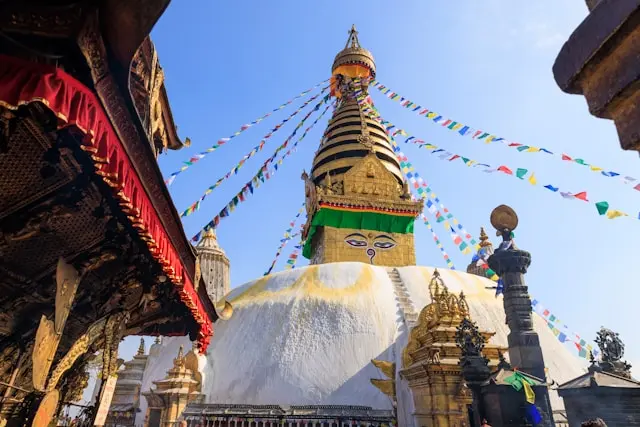
The cultural heart of Nepal, the Kathmandu Valley is home to three historic cities—Kathmandu, Patan, and Bhaktapur—each brimming with UNESCO World Heritage Sites. Known for its ancient palaces, temples, and stupas like Pashupatinath, Swayambhunath, and Patan Durbar Square, the valley is a hub of art, architecture, and spirituality. Festivals and vibrant traditions make it a living museum of Nepal's rich cultural heritage.
Kathmandu city
The political, commercial and cultural hub of Nepal is the first stop for the majority of visitors to the country. Once a separate kingdom in itself, it contains three fabled cities - Kathmandu, Patan and Bhaktapur. Out of ten UNESCO World Heritage Sites, seven cultural heritage sites are in Kathmandu Valley. The history of the Valley begins with the Buddhist saint Manjushree who slashed a passage through the surrounding hills to drain out the primordial waters and make it inhabitable. Over the centuries, a refined urban civilization emerged, built on a unique synthesis of Hinduism and Buddhism.

Dynasties came and went. Trade and the arts flourished. Its deeply religious Newar inhabitants built fabulous cities and artistic temples that attracted devout pilgrims as well as rampaging invaders. In the late 18th century, following the founding of modern Nepal within more or less the present boundaries, Kathmandu was made the capital. Kathmandu, the largest city in Nepal is situated at an altitude of 1,350m.
Walkabout Kathmandu City
A colorful and enlightening walk that gives you a feel of Kathmandu starts at Rani Pokhari, the large pond at Jamal beside the clock tower (Ghanta Ghar). The first stretch of the diagonal street leading southwest from here is called Kamalachhi. It is lined with bicycles and garment stores and brings you to the stone-paved market square of Ason, where the Annapurna temple presides over the motley of spice, grain and oil shops. Keep on walking and you come to Kel Tole after passing shops overflowing with brass utensils. Further on is the junction of Indrachowk with the temple of Akash Bhairav occupying one side. Your next stop after threading your way through the street lined with cloth shops is the stone-paved plaza of Makhan, where the Taleju temple towers over a row of handicraft shops. Walk on through Durbar Square to the intersection of Maru where you are surrounded by temples of all shapes and sizes.
Patan city
Patan, or Lalitpur, is renowned as the "City of Fine Arts." Its streets are dotted with remarkable temples, stupas, and courtyards showcasing Newar artistry
Durbar Square, like its counterpart in Kathmandu, is an enchanting mélange of palace buildings, artistic courtyards and graceful pagoda temples. Listed as a World Heritage Site, the former royal palace complex is the center of Patan’s religious and social life, and houses a museum containing an array of bronze statues and religious objects. There is an entrance fee of Rs. 200 per foreign visitor. One remarkable monument here is a 17th century temple dedicated to the Hindu God Krishna – Krishna Mandir built entirely of stone with rare stone carvings on its walls depicting the epic wars from Ramayana and Mahabharata.

Bhaktapur city
Bhaktapur often completes the cultural narrative of the valley. Its Durbar Square, Nyatapola Temple, and pottery square are equally mesmerizing
Durbar Square. As you walk in, you cannot but be overcome by a feeling of inner harmony. Such is the art and architecture and the special layout here. The Palace of 55 Windows built during the period of King Bhupatindra Malla in 1754 situated to the left as you enter through the city gate, inspires admiration. The National Art Gallery is also housed inside. The palace entrance, the Golden Gate known as Sunko Dhoka in Nepali is a masterpiece in repousse art. In front of the palace building is a medley of temples of various designs. Amongst the three Durbar Squares in the Valley, the Durbar Square in Bhaktapur is the best preserved one. There is an entrance fee of Rs. 30 for SAARC nationals and Rs. 500 for other foreign visitors. Taumadhi Square lies to the east of Durbar Square reached by a narrow brick-paved lane. The towering five-roofed Nyatapol temple presides over the square. The monument gracefully soars into the sky atop a five-story plinth. The stairway leading up to the temple is flanked by stone figures of deities and mythical beasts, each 10 times more powerful than the one immediately below.
